

Expert Care for Facial Bone & Jaw Disorders
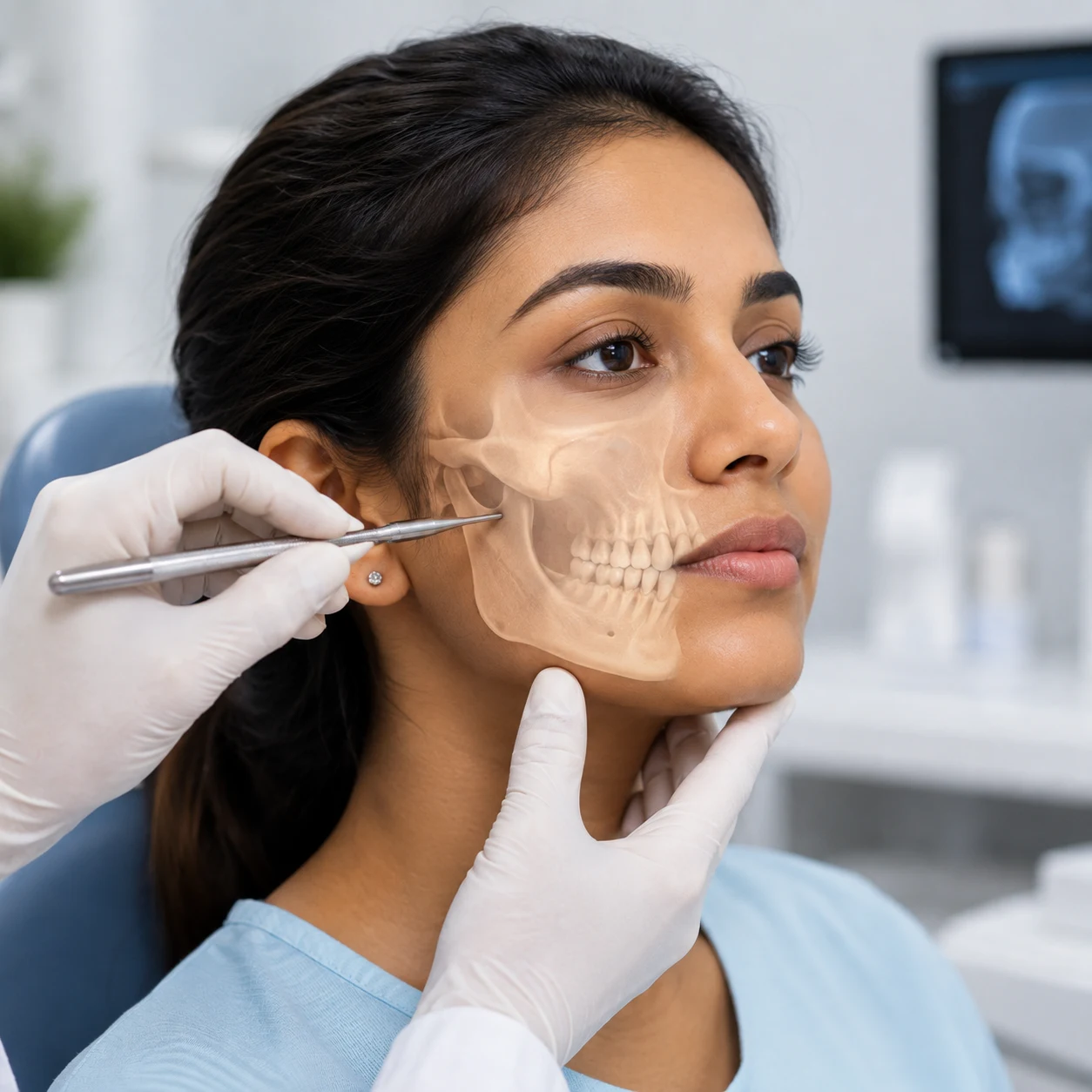
Face bone pathology includes injuries, cysts, benign tumours, TMJ disorders and skeletal jaw conditions that affect function, comfort and facial form. Early diagnosis helps guide timely care and reduce the risk of progressive bone or bite problems.
At Dr. Ranjeet Gandhi's Aesthetics – The Face Clinic in Solapur, care is led by Dr. Ranjeet Gandhi (BDS, MDS, FRFPS, FMPAS, FPFA USA), Oral & Maxillofacial Cosmetic Surgeon. Treatment plans may include functional, reconstructive or minor oral surgical options with personalized planning and long-term follow-up.
Conditions & Treatments We Offer
Select a condition to learn more. Each link scrolls to detailed information on this page.
- Jaw Fracture Management
- Jaw Cyst Removal
- Benign Jaw Tumour Management
- TM Joint (TMJ) Disorders
- Orthognathic (Corrective Jaw) Surgery
- Minor Oral Surgical Procedures
Common Symptoms
These symptoms may indicate a jaw or facial bone concern and warrant clinical evaluation:
- Jaw Pain
- Difficulty Chewing
- Swelling of Face or Jaw
- Limited Mouth Opening
- Facial Trauma
- Clicking or Locking Jaw
- Bone Infection
- Jaw Deformity
Benefits of Early Diagnosis & Treatment
Timely specialist care can support comfort, function and clearer long-term outcomes. Key benefits include:
- Accurate Diagnosis
- Improved Jaw Function
- Better Facial Symmetry
- Pain Relief
- Restored Oral Function
- Personalized Treatment Planning
- Long-Term Monitoring
- Comprehensive Follow-Up Care



comprehensive diagnostic evaluation
Clinical examination and imaging guide an accurate working diagnosis.

modern surgical techniques
Procedures are selected to support function, comfort and facial balance.

ethical clinical practice
Recommendations stay clear, realistic and centered on your needs.

patient-centered care
From consultation to follow-up, communication remains a priority.
Your Treatment Journey
From first visit to recovery review, your pathway is structured for clarity and continuity.
- Initial Consultation — discuss symptoms, history and concerns
- Clinical Examination — assess jaws, bite, soft tissues and function
- Digital Imaging & Diagnosis — use X-ray/CBCT or other imaging when needed
- Personalized Treatment Plan — define medical, surgical or staged care
- Procedure or Surgery — perform indicated treatment with clear preparation
- Recovery & Follow-Up — monitor healing and long-term function


6
core treatment pathways

Care First
Patient-Focused Approach

6
step care journey
Why Choose Our Oral & Maxillofacial Services?
Patients choose Dr. Ranjeet Gandhi's Aesthetics – The Face Clinic for specialist-led jaw and facial bone care grounded in careful diagnosis and ethical planning.
- Oral & Maxillofacial Cosmetic Surgeon
- Comprehensive Diagnostic Evaluation
- Personalized Treatment Planning
- Modern Surgical Techniques
- Ethical Clinical Practice
- Patient-Centered Care
Jaw Fracture Management
Overview
Jaw fracture management focuses on stabilizing broken facial or jaw bones after trauma to restore alignment, bite function and healing under specialist care.
Common Causes
- Road traffic or sports injuries involving the face
- Falls, assaults or workplace facial trauma
- Pathologic fractures associated with weakened bone in selected cases
Signs & Symptoms
- Facial swelling, bruising or deformity after injury
- Pain with biting or difficulty opening the mouth
- Bite change, numbness or mobility of jaw segments
Who Needs Treatment
- Patients with confirmed or suspected jaw fractures
- Individuals with bite disturbance after facial trauma
- Cases requiring surgical or non-surgical stabilization after assessment
Benefits
- Restoration of jaw alignment and bite where achievable
- Support for healing and oral function
- Structured follow-up after trauma care
Jaw Cyst Removal
Overview
Jaw cyst removal addresses fluid-filled lesions in the jaws that may expand silently and affect bone, teeth or nearby structures if left untreated.
Common Causes
- Developmental or odontogenic cysts related to teeth
- Cysts detected on routine dental imaging
- Residual or inflammatory cystic lesions after infection
Signs & Symptoms
- Swelling of the jaw or face
- Discomfort, tooth displacement or delayed tooth eruption
- Incidental finding on X-ray or CBCT without early symptoms
Who Needs Treatment
- Patients with confirmed jaw cysts on clinical and imaging review
- Individuals with expanding lesions affecting bone or teeth
- Cases where removal or decompression is clinically indicated
Benefits
- Removal or management of cystic pathology
- Protection of surrounding bone and dental structures when possible
- Histopathology guidance for definitive diagnosis when indicated
Benign Jaw Tumour Management
Overview
Benign jaw tumour management evaluates and treats non-cancerous growths of the jaws with careful diagnosis, surgical planning and monitoring to preserve function.
Common Causes
- Odontogenic or bone-related benign growths
- Slowly enlarging jaw swellings
- Lesions identified on imaging requiring specialist review
Signs & Symptoms
- Painless or slowly progressive jaw swelling
- Facial asymmetry or tooth movement
- Radiographic changes noted by your dentist or surgeon
Who Needs Treatment
- Patients with suspected or confirmed benign jaw tumours
- Individuals needing biopsy or definitive excision planning
- Cases requiring long-term surveillance after treatment
Benefits
- Accurate diagnosis through clinical and imaging evaluation
- Planned removal when indicated
- Follow-up for recurrence monitoring when required
TM Joint (TMJ) Disorders
Overview
TMJ disorder care addresses pain, clicking, locking or limited opening related to the jaw joints and associated muscles through staged clinical management.
Common Causes
- Jaw muscle strain, bruxism or stress-related habits
- Joint inflammation or disc-related dysfunction
- Trauma, bite imbalance or degenerative joint changes
Signs & Symptoms
- Jaw pain, headaches or ear-region discomfort
- Clicking, popping or locking of the jaw
- Limited mouth opening or pain while chewing
Who Needs Treatment
- Adults with persistent TMJ symptoms affecting daily function
- Patients not improving with basic self-care measures
- Individuals needing specialist assessment before invasive care
Benefits
- Symptom relief and improved jaw comfort in suitable cases
- Conservative-first planning when appropriate
- Clear pathway if advanced care is later indicated
Orthognathic (Corrective Jaw) Surgery
Overview
Orthognathic surgery repositions the jaws to improve bite function, facial balance and airway-related concerns when skeletal discrepancy cannot be corrected by orthodontics alone.
Common Causes
- Skeletal jaw discrepancies affecting bite and facial proportions
- Severe underbite, overbite or asymmetry of skeletal origin
- Selected functional concerns linked to jaw position
Signs & Symptoms
- Difficulty chewing or biting evenly
- Noticeable jaw disproportion or facial asymmetry
- Speech, bite or airway concerns linked to jaw position after evaluation
Who Needs Treatment
- Patients with skeletal malocclusion after orthodontic and surgical assessment
- Individuals prepared for coordinated orthodontic–surgical care
- Adults or selected adolescents after growth evaluation
Benefits
- Improved bite function and facial harmony where planned
- Comprehensive surgical–orthodontic coordination
- Structured recovery and long-term follow-up
Minor Oral Surgical Procedures
Overview
Minor oral surgical procedures include selected soft-tissue and dentoalveolar surgeries performed to manage pathology, infection risk or functional concerns in the mouth and jaws.
Common Causes
- Impacted or problematic teeth requiring removal
- Soft-tissue lesions needing excision or biopsy
- Localized infections or dentoalveolar surgical needs
Signs & Symptoms
- Pain, swelling or recurrent infection around teeth or soft tissues
- Lesions noted on clinical examination
- Dentist referral for surgical management
Who Needs Treatment
- Patients referred for minor oral surgery after evaluation
- Individuals with localized pathology suitable for outpatient or day-care care
- Cases cleared medically for the planned procedure
Benefits
- Targeted management of local oral pathology
- Support for comfort and oral function
- Clear aftercare and review planning
Frequently asked questions
Face bone pathology covers diseases, injuries and disorders affecting the facial bones and jaws, including fractures, cysts, benign tumours, TMJ problems and skeletal jaw discrepancies.
Seek evaluation for facial trauma, persistent jaw pain, unexplained swelling, limited mouth opening, bite changes or lesions noted on dental imaging.
Jaw cysts may arise from developmental odontogenic sources, inflammation around teeth or other local factors. Imaging and, when needed, histopathology clarify the type.
Many TMJ concerns are managed initially with conservative measures. Surgery is considered only when clinically indicated after assessment.
Orthognathic surgery repositions the jaws to improve bite function and facial balance when skeletal discrepancy cannot be corrected by braces alone.
Recovery depends on the procedure—from days for selected minor oral surgery to weeks for fractures or orthognathic care—with staged follow-up guidance.
Yes in many cases. X-rays, CBCT or other imaging may be advised to confirm diagnosis and guide planning.
Facial trauma with swelling, bite change, numbness, bleeding or difficulty opening the mouth should be assessed promptly.
Preparation may include medical review, imaging, medication guidance, fasting instructions and arrangements for support during early recovery.
Benign tumours are non-cancerous, but they still require proper diagnosis and management because they can expand and affect nearby structures.
Care is led by Dr. Ranjeet Gandhi, BDS, MDS, FRFPS, FMPAS, FPFA (USA), Oral & Maxillofacial Cosmetic Surgeon.
Book online via the appointment page or call +91 9119562828 / +91 7028562828 to schedule a visit at our Solapur clinic.


 Face Bone Pathology Jaw Surgery TMJ Disorders Orthognathic Surgery